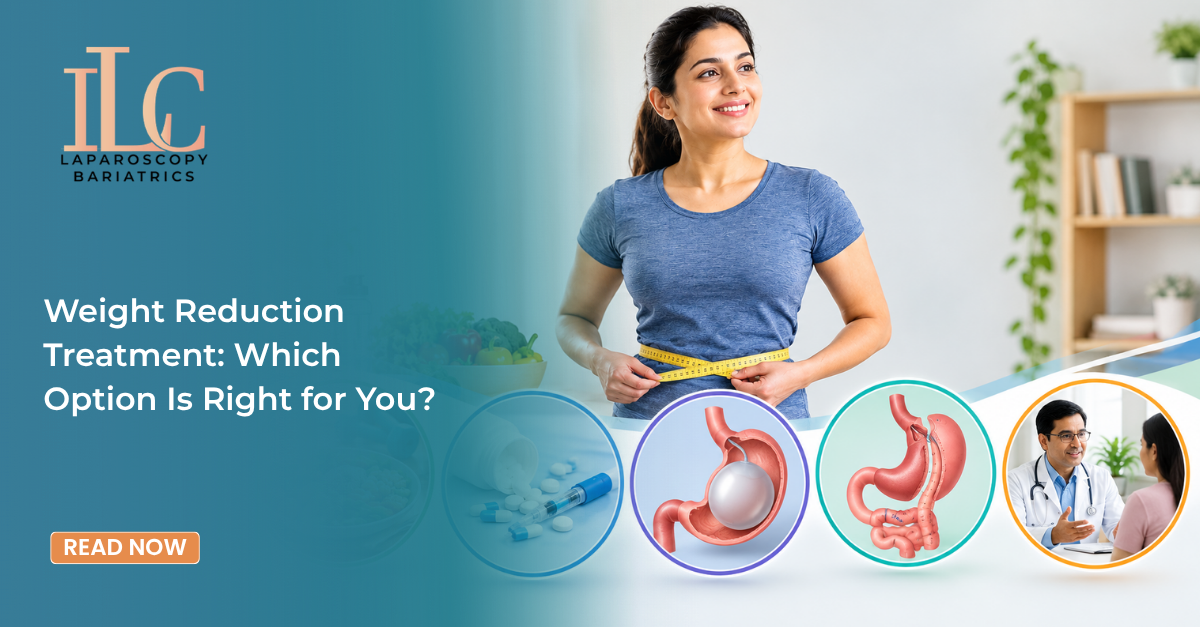
Weight reduction treatment includes lifestyle changes, medicines, procedures and surgery. The right option depends on your BMI and health conditions. No single option suits everyone, and none is a quick fix. This guide compares each weight loss treatment honestly. Start by checking your BMI with our BMI calculator.
What Is Weight Reduction Treatment?
Weight reduction treatment is any medically sound method to lose excess weight and keep it off. For Indians, BMI 23–24.9 is overweight and 25 or more is obesity (Misra et al., 2009).
Diet and Lifestyle Changes
Aim to lose 5–10% of body weight first (NCBI Bookshelf). Eat more dal, vegetables, protein and whole grains, cut sugary drinks and fried snacks, and sleep well.
Exercise
About 150 minutes of brisk activity a week is used in lifestyle trials (NCBI Bookshelf). Walking, cycling or swimming all count.
Behavioural Therapy and Support
A dietitian or counsellor can help change habits and manage emotional eating. Effective programmes combine diet, activity and behaviour therapy (NCBI Bookshelf).
Intermittent Fasting and Low-Carb Diets
A 2026 Cochrane review found intermittent fasting no better than standard dietary advice; both gave about 7% loss (MJA InSight+). Avoid fasting or strict low-carb plans if you take diabetes medicines, unless your doctor guides you.
Prescription Medicines and Injections
Use only on a doctor’s advice. In the STEP 1 trial, semaglutide plus lifestyle changes gave 14.9% average loss over 68 weeks (NEJM). Nausea and gallstones can occur, and weight may return after stopping.
Intragastric Balloon
A balloon is placed in the stomach by endoscopy and usually removed after about 6 months. Expect roughly 10–15% loss at 6 months (Gastroenterology & Hepatology). See the intragastric balloon.
Bariatric Surgery
Sleeve, bypass and Mini Bypass limit how much you can eat. Sleeve gives about 56–61% excess weight loss, bypass 68–70% (Fischer et al.). India: BMI 37.5+, or 32.5+ with conditions; ASMBS/IFSO 2022 considers Asians from 27.5. See types of surgery.
Weight Reduction Treatment Options Compared
| Treatment | Typical loss | Best for | Risks |
| Lifestyle | 5–10% body weight | Overweight, mild obesity | Regain |
| Medicines | ~15% at 68 weeks | Supervised, eligible BMI | Nausea, gallstones |
| Balloon | 10–15% at 6 months | Temporary help | Nausea, vomiting |
| Surgery | 56–70% excess weight | Severe obesity | Surgical risks |
What to Avoid
Skip detox plans, juice cleanses, fat burners, and unregulated supplements. Be wary of “guaranteed slimming” claims.
How to Choose the Right Treatment and When to See a Doctor
- You need to find a weight loss plan that works for you based on your BMI, overall health, and personal goals.
- If your BMI is 25 or higher, you suffer from diabetes or high blood pressure, and/or diet after diet has failed, then see a doctor.
- Find out whether you qualify for treatment or read about Bariatric Surgery and laser bariatric surgery.
Frequently Asked Questions
Yes. Most non-surgical weight reduction treatment starts with diet, activity and support.
There is no safe shortcut. Steady loss through a calorie deficit and activity, guided by a doctor or dietitian, is safest.
They suit only some people and need medical supervision. Nausea and gallstones can occur.
Indian guidance says BMI 37.5+, or 32.5+ with conditions like diabetes. A surgeon decides after assessment.
A sleeve removes part of the stomach, so it cannot be reversed.
Cost depends on the treatment, hospital and insurance. Contact the clinic for an estimate after consultation.