


Gallbladder stones, medically termed Cholelithiasis, are solid deposits that develop within the gallbladder due to alterations in the composition of bile. Gallstones may remain asymptomatic for years; however, when they obstruct the cystic duct or biliary tract, they can produce biliary colic, acute cholecystitis, obstructive jaundice, cholangitis, or gallstone pancreatitis.
Common symptoms include pain in the right upper quadrant or epigastric region, particularly after meals, nausea, vomiting, dyspepsia and abdominal discomfort. Patients with symptomatic or complicated gallstone disease require appropriate clinical evaluation and imaging to determine the need for treatment.
Dr.Achal Agarwal, GI and Laparoscopic Surgeon in Indore, provides evaluation and surgical management of gallbladder diseases, including symptomatic cholelithiasis and its complications.
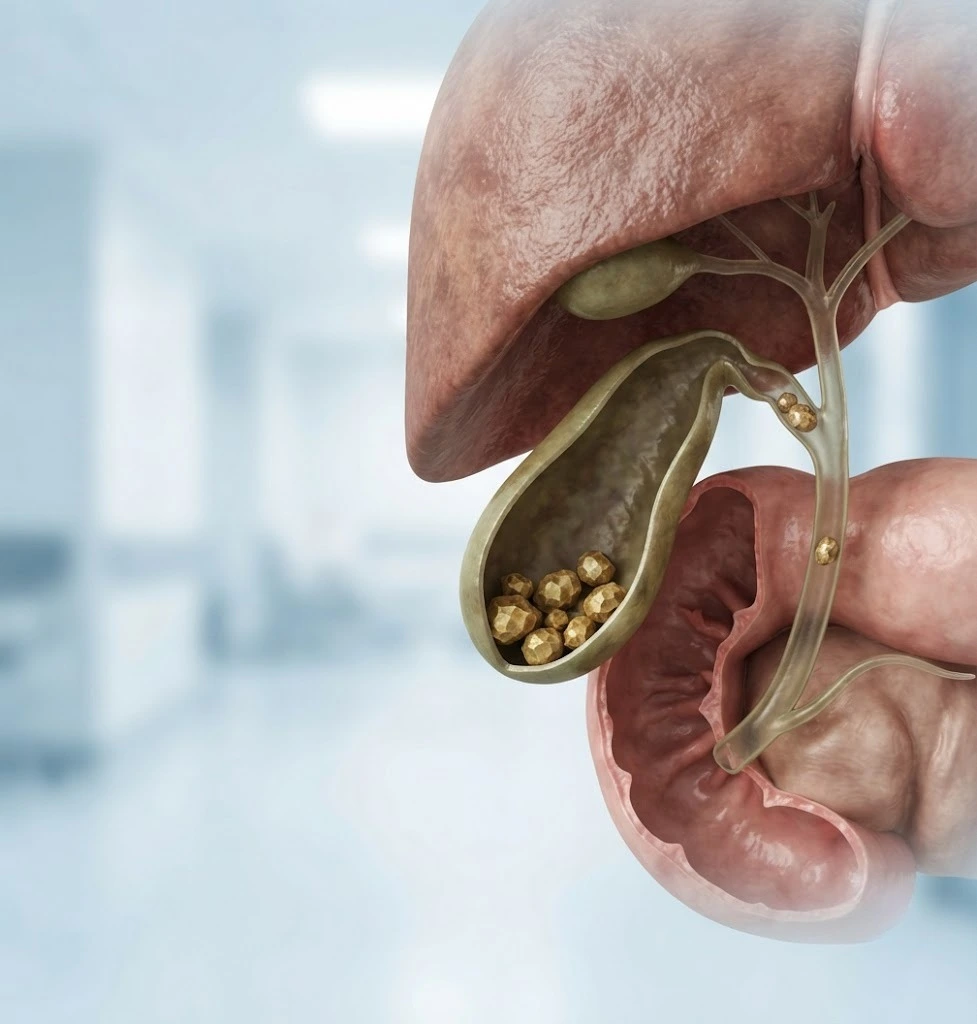
Gallstones are concretions formed within the gallbladder when the components of bile become imbalanced. The gallbladder stores and concentrates bile produced by the liver and releases it into the small intestine to assist in fat digestion.
Gallstones are broadly classified into:
Cholesterol stones
the most common type, formed predominantly from cholesterol.
Pigment stones
composed mainly of calcium bilirubinate and associated with increased bilirubin concentration in bile.
Many patients with gallstones remain asymptomatic and may discover them incidentally during an abdominal ultrasound. Symptomatic stones, however, can cause obstruction and inflammation of the gallbladder or biliary system.
Gallstone formation is multifactorial. Important risk factors include:
When bile contains excessive cholesterol relative to its ability to keep cholesterol dissolved, cholesterol crystals can form and progressively develop into gallstones.
Obesity is associated with an increased risk of cholesterol gallstones due to alterations in lipid metabolism and biliary cholesterol secretion.
A diet high in saturated fats, refined carbohydrates and processed foods may contribute to gallstone formation, particularly in individuals with obesity or metabolic abnormalities.
Diabetes and associated metabolic disturbances may increase the risk of gallstone disease. Insulin resistance, obesity and altered lipid metabolism may contribute to this association.
Rapid weight reduction, prolonged fasting and certain bariatric procedures can increase biliary cholesterol saturation and reduce gallbladder motility, increasing the risk of gallstone formation.
A positive family history may increase susceptibility to gallstone disease due to genetic and metabolic factors.
Gallstone disease is more prevalent among women and becomes increasingly common with advancing age. Pregnancy and increased estrogen exposure may also contribute to gallstone formation.
Inadequate gallbladder emptying can result in bile stasis and concentration, which may promote gallstone formation.
Gallstones may be asymptomatic or may produce characteristic biliary symptoms.
Common manifestations include:
Right upper quadrant pain
Epigastric pain
Pain following fatty or heavy meals
Pain radiating to the right shoulder or back
Nausea and vomiting
Dyspepsia
Abdominal bloating or discomfort
The typical pain of biliary colic occurs when a gallstone temporarily obstructs the cystic duct.
If inflammation or biliary obstruction develops, patients may experience more serious symptoms such as:
Persistent abdominal pain
Fever and chills
Jaundice
Dark urine
Persistent vomiting
Generalised weakness
These symptoms may indicate complications such as acute cholecystitis, choledocholithiasis or ascending cholangitis and require prompt medical assessment.
These symptoms may indicate complications such as acute cholecystitis, choledocholithiasis or ascending cholangitis and require prompt medical assessment.
Ultrasound of the abdomen is commonly used as the initial imaging investigation for suspected gallstone disease. It can identify gallstones, gallbladder wall thickening, gallbladder distension and other features suggestive of cholecystitis.
Depending on the clinical presentation, investigations may include:- Complete blood count (CBC) - Liver function tests (LFT) - Serum bilirubin - Serum amylase and lipase when pancreatitis is suspectedAdditional imaging such as MRCP (Magnetic Resonance Cholangiopancreatography) may be recommended when common bile duct stones are suspected.
Asymptomatic gallstones generally do not require routine surgical treatment in every patient. Management depends on the patient’s symptoms, clinical findings and risk of complications.
Treatment may be considered when gallstones cause:
Recurrent biliary colic
Symptomatic cholelithiasis
Acute cholecystitis
Chronic cholecystitis
Common bile duct obstruction
Choledocholithiasis
Gallstone pancreatitis
Recurrent gallbladder-related symptoms
A surgeon evaluates the clinical condition and investigations before deciding whether observation or surgical intervention is appropriate.
Incidentally detected, asymptomatic gallstones may be managed conservatively in selected patients. Regular medical evaluation may be advised depending on the patient's clinical circumstances.
Ursodeoxycholic acid may dissolve certain small cholesterol stones in carefully selected patients. However, medical dissolution therapy has limitations, requires prolonged treatment and gallstones may recur after discontinuation. It is therefore not an alternative to surgery for most patients with symptomatic gallstone disease.
For symptomatic gallstones, laparoscopic cholecystectomy is the commonly performed definitive surgical treatment.During the procedure, the gallbladder is removed through small abdominal incisions using a laparoscope and specialised surgical instruments. The procedure treats the source of gallstone formation rather than simply removing individual stones.
Laparoscopic gallbladder removal may be recommended in patients with:
The exact timing and surgical approach depend on the patient’s condition and the presence or absence of complications.
Laparoscopic cholecystectomy is a minimally invasive surgical procedure. Compared with conventional open surgery, it generally provides:
Faster postoperative recovery
Smaller postoperative scars
The gallbladder is not essential for digestion. Following cholecystectomy, the liver continues to produce bile, which flows directly into the small intestine.
The cost of laparoscopic cholecystectomy in Indore varies according to the patient’s clinical condition and treatment requirements.
Factors that may influence the overall cost include:
01
Surgical procedure and complexity
02
Hospital and room category
03
Surgeon and anaesthesia charges
04
Preoperative investigations
05
Medicines and consumables
06
Duration of hospitalisation
07
Presence of complications
08
Requirement for additional procedures
Patients with uncomplicated cholelithiasis may have different treatment requirements compared with patients who have acute cholecystitis, common bile duct stones or gallstone pancreatitis.
An accurate estimate can be provided after clinical assessment and review of the relevant investigations.
Not all gallstones can be prevented because factors such as age, genetics and family history cannot be modified. However, maintaining a healthy body weight, avoiding crash diets and following a balanced diet may help reduce the risk.
Gradual weight reduction is preferable to rapid Weight Loss. Regular physical activity and appropriate management of metabolic conditions such as diabetes and dyslipidaemia may also contribute to overall metabolic health.
Medical evaluation is advisable if you experience recurrent upper abdominal pain, particularly after meals, or have associated nausea and vomiting.
Urgent medical assessment is required when abdominal pain is accompanied by:
These findings may indicate biliary obstruction, acute cholecystitis, cholangitis or another hepatobiliary complication.
Dr.Achal Agarwal, GI and Laparoscopic Surgeon in Indore, provides evaluation and surgical management of gallstone disease and other gastrointestinal conditions.
Treatment planning is based on:
Clinical symptoms
Abdominal examination
Ultrasonography and other imaging findings
When surgery is indicated, laparoscopic cholecystectomy may be performed using a minimally invasive approach.
Asymptomatic gallstones may not require treatment. Medical dissolution therapy is suitable only for selected cholesterol stones. For recurrent symptomatic gallstones or complications, laparoscopic cholecystectomy is generally considered the definitive treatment.
Laparoscopic cholecystectomy is a commonly performed surgical procedure. Like every operation, it carries potential risks, including bleeding, infection, bile leakage and bile duct injury. The individual risks should be discussed with the treating surgeon.
Recovery varies according to the patient's health, surgical findings and occupation. Following an uncomplicated laparoscopic cholecystectomy, many patients resume routine activities within approximately 1–2 weeks, although complete recovery may take longer.
Gallstones cannot develop inside the gallbladder after it has been removed. However, a stone may occasionally be present in or subsequently develop within the bile duct.
Yes. Most people can maintain normal digestion after gallbladder removal. The liver continues to produce bile, which flows directly into the intestine.
Yes. Laparoscopic cholecystectomy is performed through small abdominal incisions using a laparoscope and specialised instruments. In selected complicated cases, conversion to open surgery may occasionally be necessary.
The investigations depend on the patient's condition. Common assessments include abdominal ultrasonography, CBC, liver function tests, renal function tests and other preoperative investigations. Additional imaging may be required when common bile duct stones are suspected.
Gallstone disease can range from asymptomatic cholelithiasis to complicated biliary disease. Recurrent biliary colic, acute cholecystitis, choledocholithiasis and gallstone pancreatitis require appropriate clinical assessment and timely management.
At Indore Laparoscopy Center, patients can consult Dr.Achal Agarwal for evaluation and management of gallbladder stones. After reviewing symptoms, examination findings and investigations, an appropriate treatment plan can be discussed.
If you are experiencing recurrent right upper abdominal pain, nausea, vomiting or post-meal discomfort, consult a qualified GI and laparoscopic surgeon for appropriate evaluation.
Copyright © 2026 Indore Laparoscopy Center. All Rights Reserved. Powered by Mrdigito.com