

The practice of hysterectomies is spreading fast because of sedentary living, obesity, and past abdominal surgery. Simultaneously, the art of surgery has advanced rapidly, and minimally invasive surgery has become the standard option. Nowadays, people are frequently provided with two modern solutions: laparoscopic surgery and robotic-assisted surgery. As both technologies are widely used in 2026, one question that comes to mind is how each can be improved for hernia repair.
Understanding Hernia and Its Treatment
A hernia is an external occurrence when an internal organ or tissue slips through a vulnerable point in the abdominal wall. The most frequent ones are inguinal, umbilical, incisional, and ventral hernias. Though some early hernias do not produce much pain, their non-surgical treatment is not always effective, and surgery can be required since hernias do not resolve and may develop or cause varying complications.
What Is Laparoscopic Hernia Surgery?
Laparoscopic hernia repair is a minimally invasive procedure in which surgery is performed through tiny incisions using a camera and long instruments. The surgeon looks at the area on a screen and fixes the hernia with the help of placing mesh. The main advantages are smaller scars, less pain, a quicker recovery, and a shorter hospital stay compared to open surgery. It is now a standard and common practice in hernias of a wide variety.
What Is Robotic Hernia Surgery?
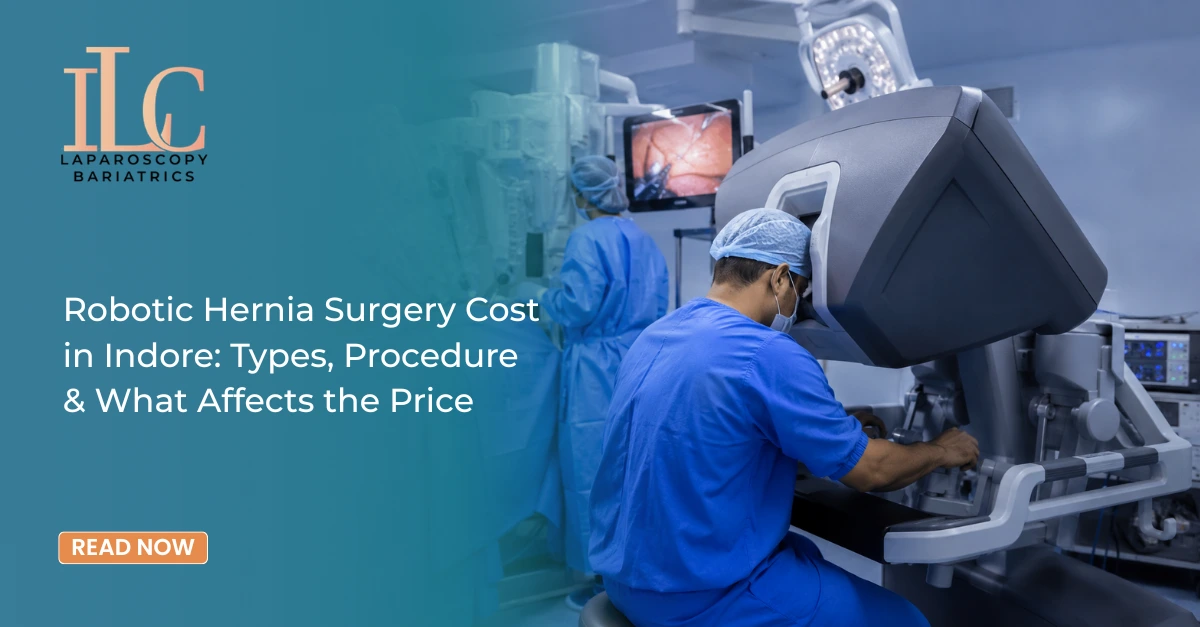
Robotic hernia surgery is a step forward in minimally invasive surgery in which the surgeon operates robotic arms at a console. The system offers high-definition 3D visualization and greater control over movements and precision. Notably, the robot is not independent; the surgeon performs all steps. By the year 2026, robotic surgery will become popular for complex and precise hernia cases.
Key Differences: Robotic vs. Laparoscopic Surgery
Laparoscopic surgery uses 2D imagery, whereas robotic surgery uses 3D depth perception. Robotics is more precise and improves the ergonomic comfort of the surgeon, particularly in long or complicated operations. Nevertheless, robotic surgery is less user-friendly and more technologically reliant to an extent. In most cases, laparoscopy is still efficient, proven, and cheaper.
Who Benefits More From Robotic Surgery?
Robotic surgery is especially useful with complicated or recurrent hernias, obese patients, large incisional hernia, and those that involve a delicate dissection and suturing.
When Laparoscopic Surgery Is the Better Choice
In simple or small hernias, economically sensitive patients or where robotic machines are not provided, laparoscopic surgery is also a good alternative- particularly in the hands of experienced surgeons.
Conclusion
Robotic and laparoscopic hernia surgery is safe and effective. It has no universal answer. It depends on the type of hernia, the characteristics of the patient, and the skills of the surgeon. It is better to talk to a qualified expert, such as Dr. Achal Agrawal at Indore Laparoscopy Center, and be sure that the long-term relief and recovery are the correct decision.