
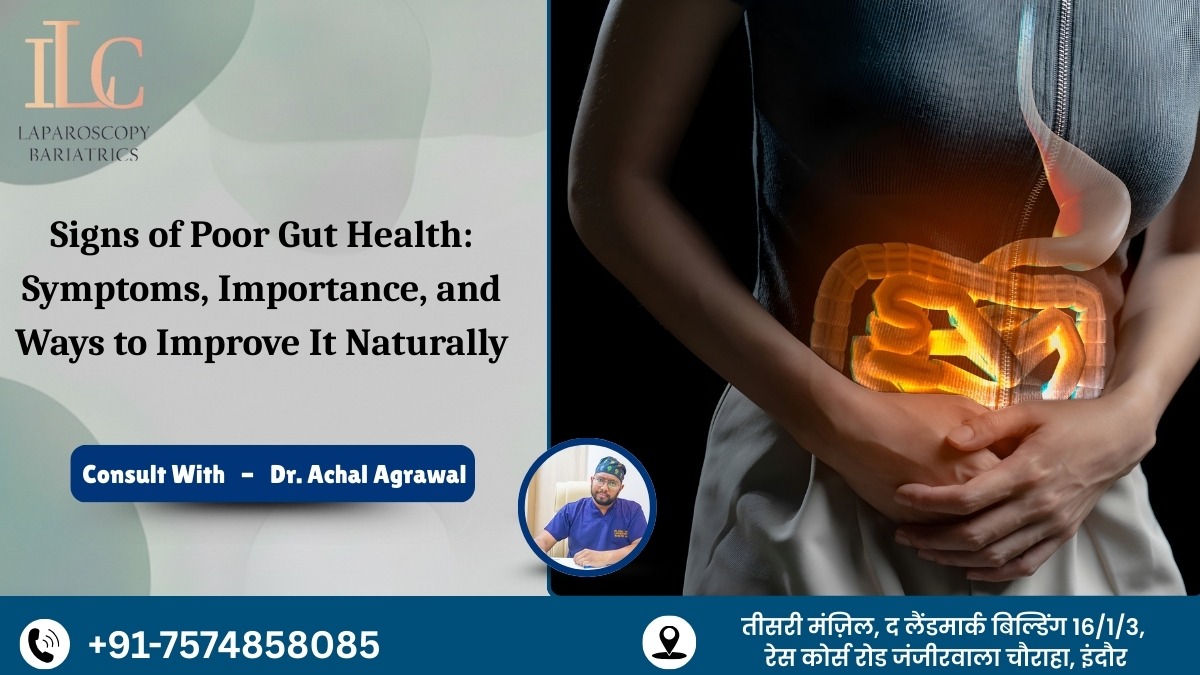
Sign you might have poor gut health:-
- Frequent Digestive discomfort such as bloating, gas, abdominal pain, acidity, nausea
- Irregular bowel movements including constipation, diarrhea, hard or dry stools, or difficulty in passing stools
- Unexplained weight loss due to poor absorption of nutrients and unintended weight gain caused by Chronic inflammation
- Persistent fatigue, low energy levels, lack of motivation, and difficulty concentrating
- skin problems linked to gut imbalance such as acne, eczema, Rashes, dry or itchy skin
- Mood changes including anxiety, depression, irritability, and Frequent mood swings
- Frequent infection or low immunity
- Bad breath despite good oral hygiene
- Food intolerance or sensitivity to certain foods
Why Gut Health is important:-
A healthy gut plays a key role in:-
- proper digestion and nutrient absorption
- Strong immune system
- Hormonal imbalance
- Mental well-being (gut-brain connection)
- Maintaning healthy weight and metabolism
Poor gut health, if ignored, can lead to long-term problems like,
- IBS,
- acidity
- Piles,
- fissure
- obesity
- Diabetes
- low immunity
How to improve your gut health?
- Eat a fibre-rich diet including fruits, vegetables, whole grains, and millets
- Include Probiotic foods such as curd (yogurt), kefire,buttermilk, idli, Dosa,and Fermented foods
- Drink plenty of water throughout the day
- Manage stress with yoga, medication, and deep-breathing exercises
- Exercises regularly to improve digestion and overall well-being
- Limit processed foods, junk food, sugary items, and excessive alcohol
- Avoid frequent use of painkiller and unnecessary antibiotics
- Get adequate sleep (7-8 hours) to allow the gut and body to heal and repair
- Eat meals on time and chew food properly