
One of the most prevalent hormonal disorders that is currently experienced by women is Polycystic Ovary Syndrome (PCOS). Most PCOS women have difficulties with weight gain and experience difficulty with weight loss despite the implementation of rigorous diets and exercise. The reason behind this is that PCOS is not purely a lifestyle concern- it is a metabolic and a hormonal disorder. The real problem is that it is the problem of hormonal imbalance, which is why the traditional diets do not work and cause frustration, guilt, and weight gain again and again.
Understanding PCOS and Its Impact on the Body
PCOS is an illness characterized by hormonal disproportion and metabolic dysfunction. Ordinary symptoms include weight gain, abnormal or absent menstrual cycle, insulin resistance, acne, and hair overgrowth. In PCOS, the body synthesizes too much insulin and androgens (male hormones), and this interferes with normal metabolism. This causes more fat to be stored in the body, less fat to be burned, and the inability to utilize energy effectively. Consequently, even a calorie-diet can fail to bring about anticipated weight loss.
Why Traditional Diets Fail in PCOS
Hormonal imbalance is the greatest obstacle to weight loss rather than lack of willpower in PCOS patients. High insulin concentration facilitates the storage of fat and inhibits its breakdown. Normal metabolic signaling is disturbed by high testosterone. Hunger hormones such as ghrelin and leptin at the same time become dysregulated, which makes people more cravings and less satisfied. Diet-only solutions are likely to fail to yield long-term solutions because such hormones are not in balance..
What Is Metabolic (Bariatric) Surgery?
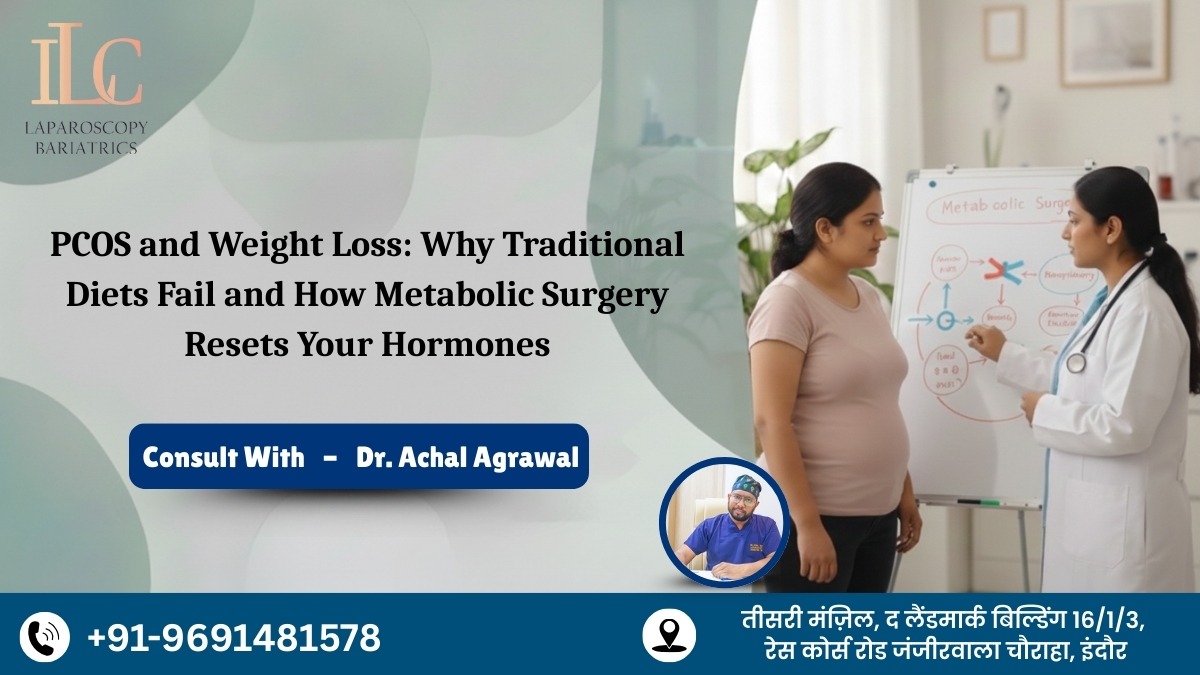
Metabolic surgery is not meant to cut down on food intake but rather correct metabolic dysfunction. In comparison with cosmetic weight-loss, metabolic surgery focuses on insulin resistance and hormonal imbalance. PCOS patients undergo common procedures of Sleeve Gastrectomy and Gastric Bypass. The surgeries are normally a case to women having a high BMI or women having PCOS-induced diabetes or metabolic complications that are unresponsive to medical therapy.
How Metabolic Surgery Resets Hormones
The direct consequence of metabolic surgery, which may appear within days, is that insulin sensitivity improves significantly. Androgen levels are depleted, menstrual cycles become regular, and ovulation may be restarted spontaneously. Hunger hormones get normalized, hence controlling the appetite. Notably, surgery deals with the cause of PCOS-related weight gain and not only with its symptoms.
Who Should Consider Metabolic Surgery?
Metabolic surgery may be used to help women with PCOS who can pass BMI requirements, have uncontrolled diabetes or persistently fail despite the use of medication and lifestyle alteration. Proper assessment by an expert is required in order to ascertain appropriateness.
Conclusion
PCOS weight loss is not a failure of will, but a hormonal problem. Metabolic surgery is not a quick fix; it is a scientifically researched metabolic reset. Professional attention of the specialists,such as Dr. Achal Agrawal at Indore Laparoscopy Center, can restore the hormonal balance and health in women over the long term.